Las siguientes, son las palabras que yo considero claves acerca de la lectura de la actividad 1
closed system
Noun
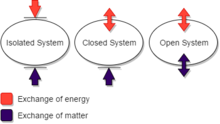
In thermodynamics, a closed system can exchange energy (as heat or work) but not matter, with its surroundings. An isolated system cannot exchange any heat, work, or matter with the surroundings, while an open system can exchange energy and matter.
Example: Early theorists assumed a business to be a CLOSED SYSTEM, and hence, focused on the inner arrangements of a business such as altering policies and working incentives for employees.
es: Sistema cerrado
Conduction
noun
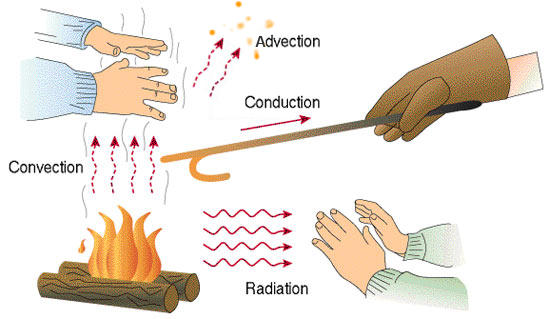
the process by which heat or electricity is directly transmitted through a substance when there is a difference of temperature or of electrical potential between adjoining regions, without movement of the material.
Example: Thick products which heat by CONDUCTION, and whose thermal diffusivities are about the same as water, there being insufficient or no covering liquid.
es: Conducción
Convection
Noun
the movement caused within a fluid by the tendency of hotter and therefore less dense material to rise, and colder, denser material to sink under the influence of gravity, which consequently results in transfer of heat.
Example: The liquid portion heats rapidly by CONVECTION and transfers the heat into particulate by conduction.
es: Convección
Heat transfer
Noun
In general, heat transfer describes the flow of heat (thermal energy) due to temperature differences and the subsequent temperature distribution and changes.
Example: Fouling causes extensive problems in the processing of milk as it reduces the efficiency of HEAT TRANSFER and can present microbiological problems.
es: Transferencia de calor
inner surface
noun
The inner parts of something are the parts which are contained or are enclosed inside the other parts, and which are closest to the centre.
Example: Upon the INNER SURFACE of the envelope, Matrix protein or M1 coats the entire surface, stabilising the particle structure.
es: superficie interior
mass transfer
noun
Mass transfer is the net movement of mass from one location, usually meaning stream, phase, fraction or component, to another. Mass transfer occurs in many processes, such as absorption, evaporation, drying, precipitation, membrane filtration, and distillation. Mass transfer is used by different scientific disciplines for different processes and mechanisms.
Example: Process engineering help with plant suitability and compatibility, help decide between isolation options for example crystallisation, resolution of specific scale up issues for example agitation and heat MASS TRANSFER, and make sure engineering problems are not solved using chemistry.
es: transferencia de masa
open system
Noun
a material system in which mass or energy can be lost to or gained from the environment.
Example: In contrast to this Bhaskar advanced the view that reality is an 'OPEN SYSTEM' in which causal mechanisms (like gravity) interact with other causal mechanisms and can interrupt their causal effects, therefore the manifestation of effects at the empirical level is contingent upon the interaction between unobservable entities.
es: Sistema abierto
Radiation
Noun
the emission of energy as electromagnetic waves or as moving subatomic particles, especially high-energy particles which cause ionization.
Example: Monteith (1973) and many others have highlighted the agronomic importance of this relationship and the cumulative amount of solar RADIATION is often a good indicator of yield.
es: Radiación
Total energy
noun
The total energy of a system is the sum of kinetic and gravitational potential energy, and this total energy is conserved in orbital motion.
Example: Being that Protein counts for 10 15% of TOTAL ENERGY, determining the protein composition in foods is important so that one can use the recommended intake for a group of individuals and help provide a rich source of protein from different foods.
es: Energía total
undergo
verb
experience or be subjected to (something, typically something unpleasant, painful, or arduous).
Example: The narrative continually forces the reader to re-asses their opinions, allowing them to UNDERGO a journey into the self.